
Historical Preservation
Why the mortar matters most
The most common damage we’re called in to correct isn’t age — it’s a previous repair done with modern portland cement. Historic brick and stone are soft, and they’re meant to be pointed with a softer lime-based mortar that flexes and lets moisture escape through the joint.
When a hard cement mortar is used instead, the joint becomes stronger than the masonry around it. Moisture has nowhere to go, so it exits through the face of the brick — and the brick spalls, crumbles, and is lost for good. We test and match mortar to the original in composition, strength, color, and joint profile.
Repair before replacement
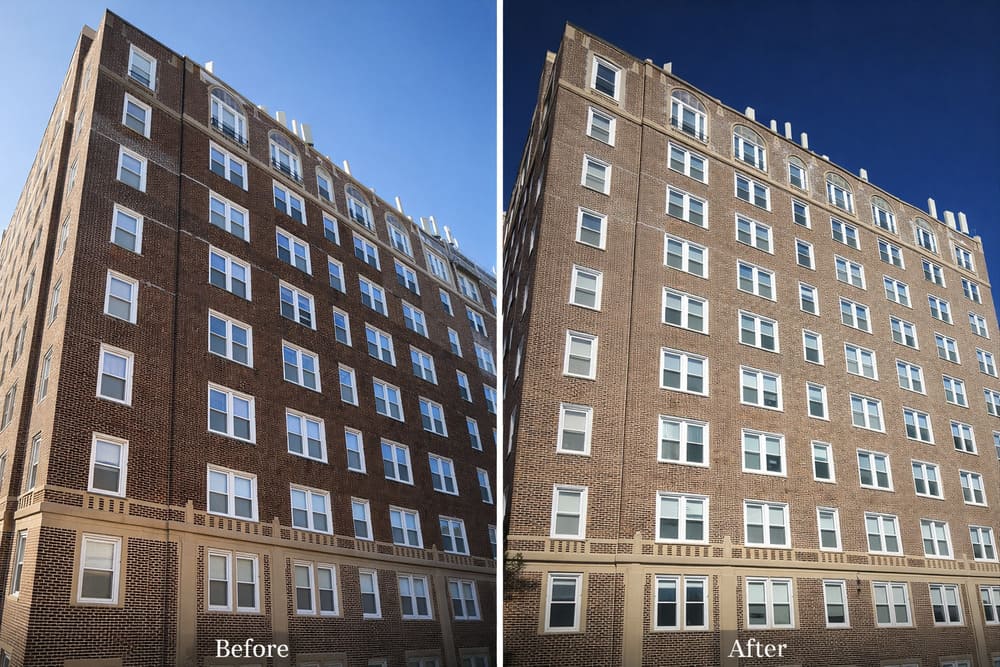
Our approach is to retain as much original material as possible. Sound brick and stone stay. Units that are truly failed get replaced with salvaged or closely matched material, laid in the original bond and pattern so the repair reads as part of the building rather than a patch on it.
We work with congregations, school administrations, facilities directors, and preservation consultants, and we’re used to phasing work around services, semesters, and public access — with clear scopes and documentation along the way.
All Services
Free Estimate
Let's review your project.
Request a free, no-obligation estimate. We’ll assess your property and give you honest, detailed recommendations.